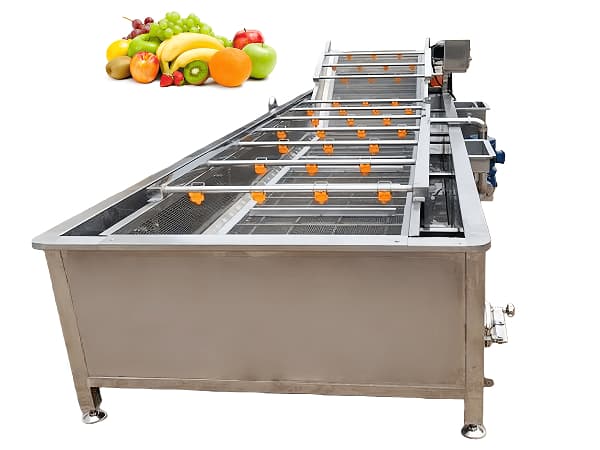
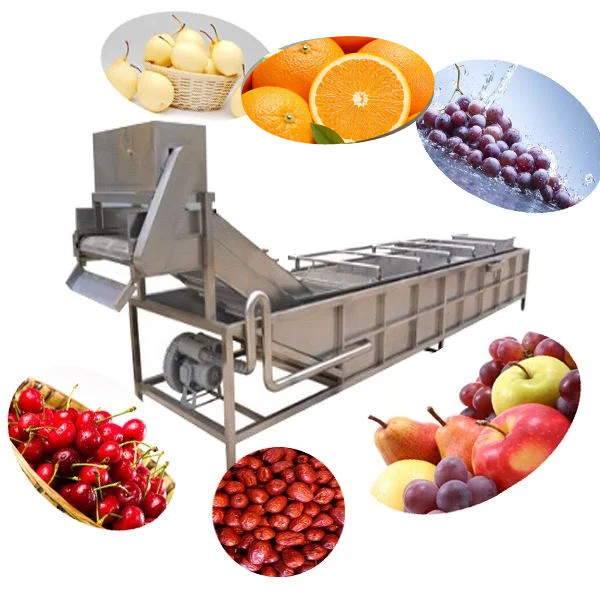
A bubble fruit washing machine, also known as an air bubble washing machine or surfing washing machine, is a pretreatment equipment used in fruit juice processing. It washes fruit before crushing, peeling, pitting, pulping or juice extraction. It is mainly used to remove sand, soil, dust and other debris from the surfaces of fruits such as apples, oranges, pears and mangoes.
Get a Fruit Washing Machine QuoteAGICO helps customers choose a suitable bubble fruit washing machine based on your fruit, hourly processing capacity and overall juice production line. Simply tell us your fruit type, required throughput, budget and production line details. Our engineers will help you select the most suitable fruit washing machine.
Why Use Bubble Washing for Fruit Processing?
Fruit washing needs to remove surface dirt while keeping pace with the rest of the processing line. Bubble washing combines air agitation and circulating water to support continuous cleaning before sorting, peeling or juice extraction.
Gentle Fruit Handling
Air bubbles agitate the water and turn the fruit during washing. With suitable airflow and conveying settings, this helps limit harsh mechanical contact, particularly when handling softer or ripe fruit.
Removal of Surface Dirt
Moving water helps loosen soil, dust and other debris from the fruit surface. Filtration collects debris from the circulating water, while an optional clean-water spray provides a final rinse.
Less Manual Handling
Continuous washing and conveyor discharge reduce the need to wash and transfer fruit by hand, helping operators manage a steady flow of material.
Controlled Water Use
Filtered wash water can be recirculated within the system. Fresh-water replenishment, regular water changes and final rinsing are arranged according to the processing requirements.
A Fit for Different Production Capacities
Tank dimensions, conveyor width and discharge arrangements can be selected to match the fruit and required throughput, making the washer suitable for a standalone operation or an integrated fruit processing line.
How Does a Bubble Washing Machine Work?
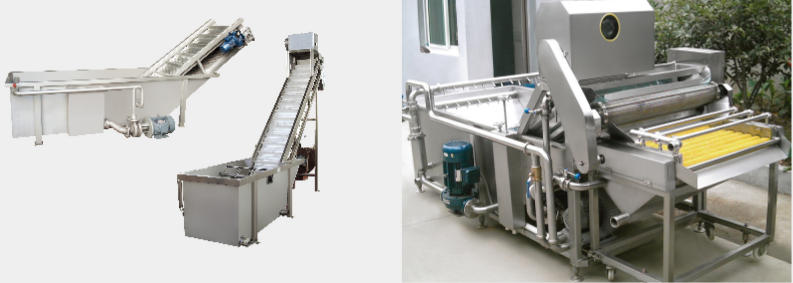
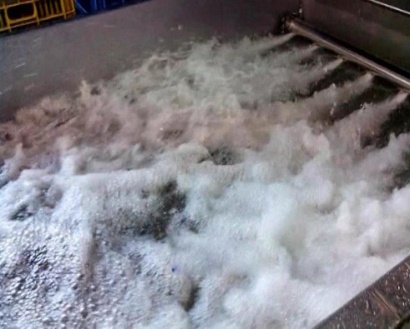
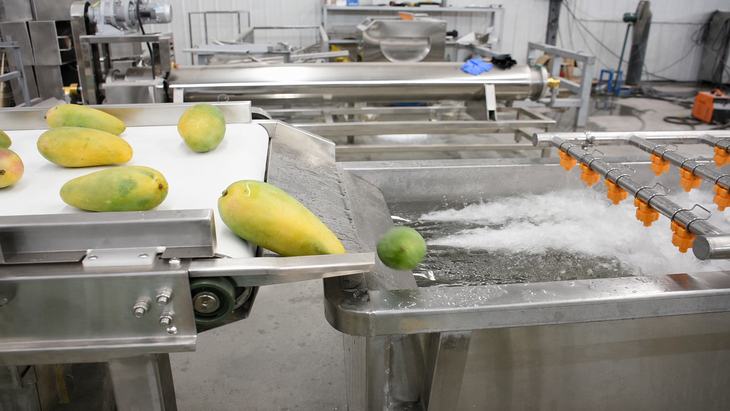
Fruit enters a water-filled tank, where an air blower feeds air through perforated pipes at the bottom. The rising bubbles agitate the water and turn the fruit, helping loosen dirt and other surface debris. A separate pump circulates the wash water and helps move the fruit toward the discharge conveyor.
During washing, heavier particles settle at the bottom, while the filtration system collects debris carried by the circulating water. The filters and tank bottom require regular cleaning to remove accumulated waste.
An inclined conveyor lifts the fruit out of the tank, allowing water to drain away. Spray nozzles above the discharge section rinse the fruit with clean water to remove remaining loose particles before it moves to sorting, peeling, crushing or juice extraction.
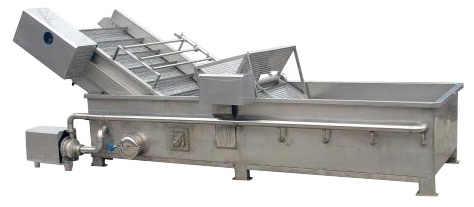
Bubble Washing Machine Configuration
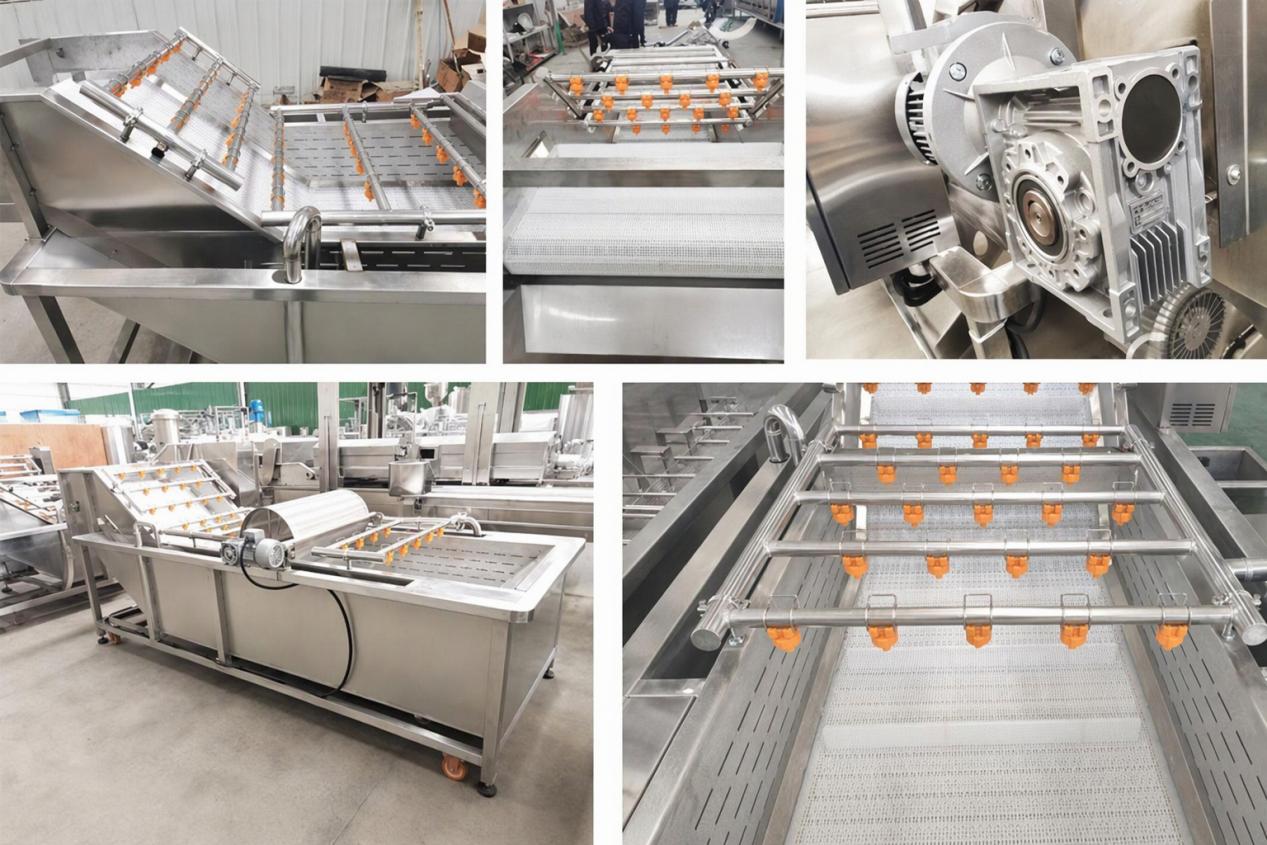
Stainless Steel Washing Tank
The washing tank and elevator frame are fabricated from stainless steel plate at least 1.5 mm thick. SUS304 or SUS316 stainless steel can be specified to suit processing requirements. The transmission shaft is made of 1Cr13 stainless steel.
Air Blower System
Supplies air through pipes at the bottom of the tank. The rising bubbles keep the water and fruit moving, helping loosen dirt from the fruit surface.
Water Circulation and Filtration System
A circulating pump delivers water for washing, while the filtration system collects debris from the return flow so the water can be reused.
Fruit Propelling Device
A motor-driven mechanism with speed reduction helps move fruit toward the elevator for continuous discharge.
Scraper Elevator
Lifts washed fruit out of the tank and transfers it to the next processing stage. Stepless speed adjustment allows the discharge rate to be matched to downstream equipment.
Spray Rinsing Unit — Optional
Clean-water spray nozzles provide a final rinse as fruit leaves the tank. Spray pressure should be selected to suit the fruit being processed.
Control Panel
Push-button or PLC control is available according to the selected configuration, providing access to the blower, circulation pump and conveyor controls.
Processing Capacity
Available configurations cover 1–20 t/h. Actual throughput depends on the fruit type, incoming condition, required washing time and machine size.
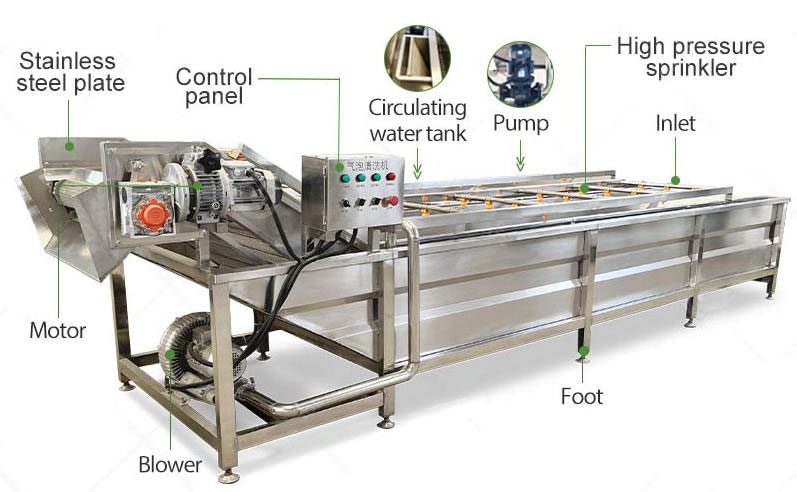
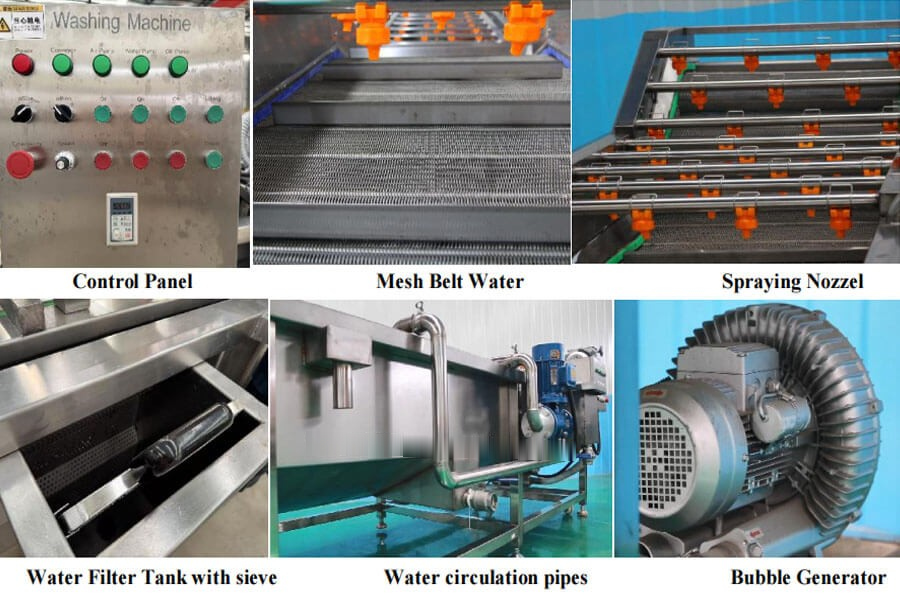
Key Factors When Choosing a Bubble Washing Machine
Choose a bubble washing machine based on the fruit you process, your required throughput and how it will fit into your production line. Pay particular attention to the following details.
-
Adjustable Washing Conditions
Check whether airflow, water flow and conveyor speed can be adjusted independently. These settings help you adapt the washing intensity and residence time when switching between fruits of different sizes, firmness and maturity.
-
Fruit Handling and Discharge
Conveyor openings, flights and side guards should suit the size of your fruit. Check transfer gaps and discharge height to reduce the risk of fruit becoming trapped, accumulating at the outlet or dropping onto the next conveyor.
-
Filtration and Final Rinsing
Ask how floating debris and settled sediment are removed, how the circulating water is filtered, and where fresh water enters the system. Confirm whether the discharge section has a separate clean-water rinse.
-
Access for Daily Cleaning
Check how easily operators can reach the tank bottom, remove the filters and clean beneath the conveyor. Accessible surfaces and effective drainage make end-of-shift cleaning more practical.
-
Materials of Construction
Confirm the material grades used for the tank, conveyor, shafts and other parts in contact with fruit or wash water. The specification should identify individual components rather than simply describe the machine as “stainless steel.”
-
Production Line Integration
Match the inlet and outlet heights, conveyor speed and working capacity to your existing equipment. Confirm whether the controls allow the washer to run in coordination with upstream feeding and downstream sorting, peeling or juice extraction.
Get a Fruit Washing Machine Quote
AGICO helps customers choose a suitable bubble fruit washing machine based on your fruit, hourly processing capacity and overall juice production line. Simply tell us your fruit type, required throughput, budget and production line details. Our engineers will help you select the most suitable fruit washing machine.
Send Your Washing RequirementsHow to Choose a Washing Machine for Your Fruit
Fruits vary in size, firmness and other characteristics, so they require different washing configurations. Some applications may need bubble washing combined with rotating brushes and spray rinsing, as in citrus washing. Therefore, we cannot simply say that our bubble fruit washing machine is suitable for every fruit. We can, however, help you plan a suitable washing system based on your requirements. The table below outlines the main selection considerations for common fruits.
| Fruit | Key Selection Considerations |
|---|---|
| Apples and pears | Feeding method, washing residence time, elevator discharge, and the capacity of upstream and downstream equipment |
| Oranges, lemons and other citrus fruits | Surface dirt conditions and whether additional brush washing is needed |
| Mangoes and other larger fruits | Fruit size, maturity, conveying space and discharge drop height |
| Grapes, strawberries and other delicate fruits | Water flow, aeration, spray rinsing and conveying methods require separate assessment; configurations for other fruits should not be applied without review |
Bubble Washing Machine vs Other Washing Methods
| Washing Method | Cleaning Effect | Produce Damage | Labor Cost | Automation |
|---|---|---|---|---|
| Manual Washing | Low–Medium | Low | High | No |
| Brush Washing Machine | High | Medium–High | Low | Yes |
| High Pressure Washer | High | High | Low | Yes |
| Bubble Washing Machine | High | Very Low | Low | Yes |
Frequently Asked Questions
What fruits can a bubble washing machine wash?
Bubble washing machines can be configured for fruits such as apples, pears, oranges and mangoes. Softer fruits, including strawberries and ripe peaches, require closer attention to airflow, water movement and conveying conditions. Tell us the fruit variety, size and maturity so we can assess a suitable configuration.
Can one machine wash different types of fruit?
Yes, provided the machine is suitable for the size and handling requirements of each fruit. Airflow, water flow and conveyor speed may need adjustment between products. Conveyor openings and transfer gaps also need to accommodate the smallest fruit you plan to process.
Will bubble washing damage the fruit?
Bubble washing uses moving water to help limit harsh mechanical contact, but fruit condition and machine settings still matter. Excessive agitation, prolonged washing or a high discharge drop can bruise softer fruit. Trials with representative fruit can help establish suitable operating conditions.
How do I choose the right processing capacity?
Start with your required hourly throughput, fruit type and incoming dirt level. The machine must provide enough washing time while keeping pace with the rest of your line. Capacity should be confirmed for your actual product rather than selected from the model name or tank length alone.
Does the machine reuse washing water?
A machine fitted with a circulation pump and filtration system can reuse wash water. Filters collect debris, but they do not eliminate the need for fresh water or regular water changes. The replacement schedule depends on the amount of fruit processed and the condition of the water.
Is a final spray rinse necessary?
A final rinse is useful for removing loose particles and wash water carried out of the tank. It can be included at the discharge section using a separate clean-water supply. Whether it is needed depends on your washing requirements and the next processing step.
Can bubble washing remove pesticide residues?
Washing may reduce some surface residues, but results depend on the pesticide, fruit surface and washing conditions. A bubble washing machine should not be presented as removing all pesticide residues or replacing a validated food safety process.
How is the machine cleaned after production?
Drain the tank, remove collected debris and clean the filters, conveyor and accessible internal surfaces according to the equipment’s cleaning instructions. Pay particular attention to the tank bottom, conveyor underside and discharge area, where material can accumulate.
Can the washer connect to an existing fruit processing line?
Yes, subject to matching the equipment layout and operating requirements. Inlet and outlet heights, conveyor speed, processing capacity and controls should be checked against the upstream feeder and downstream sorting, peeling, crushing or juice extraction equipment.